
Pressure Reducing Valve · Gwinnett County, GA
Pressure Reducing Valve Inspection & Replacement in Gwinnett County
Most homeowners never think about water pressure until it's too high - and high pressure quietly shortens the life of every fixture, valve, and water heater in the house. On this Gwinnett County call, a routine pressure check caught a failing PRV and a waterlogged expansion tank. Stars and Pipes Plumbing Atlanta, MP211014.
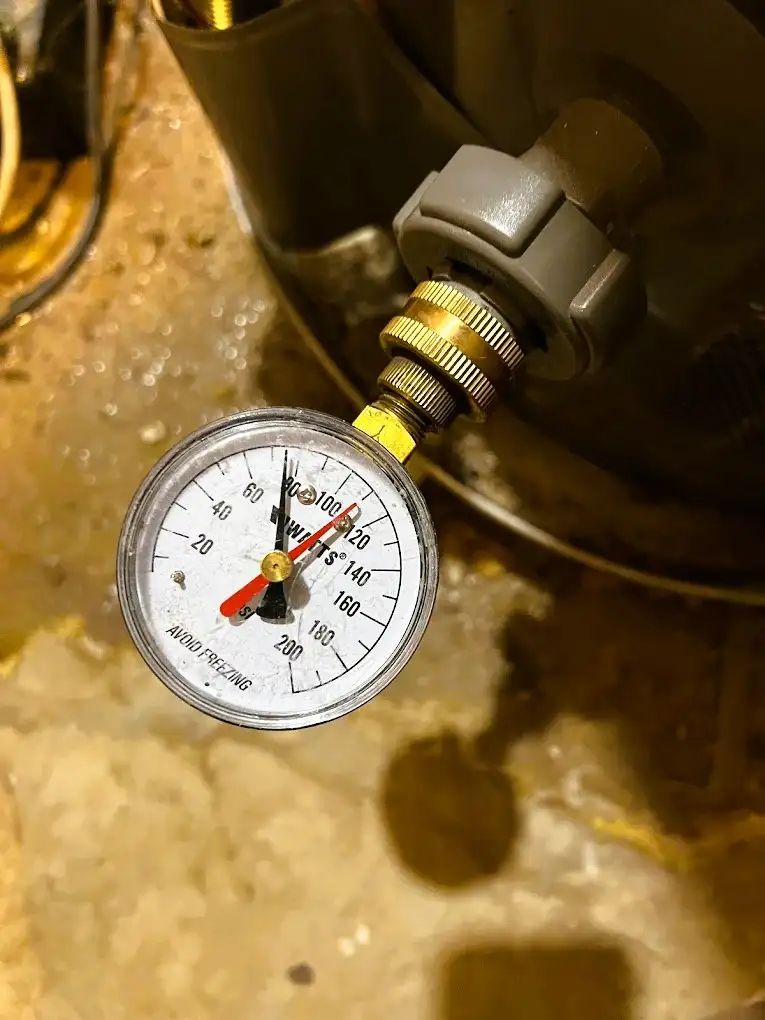
- ServicePressure Reducing Valve Replacement
- LocationGwinnett County, GA
- Call typeRoutine service · pressure check
- OutcomePressure back in safe range
- MP211014GA Master Plumber
- Veteran-OwnedFamily-operated since 2024
- 5.0★200+ reviews
- Same-Day24/7 emergency service
The diagnosis
What we found
We run a water pressure check on every service call, and this one read high - well above the safe range fixtures and appliances are built for. The existing thermal expansion tank had also failed, so the system had no way to absorb the pressure spikes a closed system produces every time the water heater cycles.
The work
What we did
- Measured static water pressure with a gauge as part of the routine check
- Confirmed the pressure reducing valve was no longer regulating properly
- Found the thermal expansion tank waterlogged and no longer doing its job
- Replaced the PRV to bring pressure back into the safe range
- Replaced the expansion tank to protect the water heater and closed system
- Re-checked pressure to verify a safe, steady reading
On this job
- Pressure reducing valve (PRV)
- Thermal expansion tank
- Water pressure gauge
The result
Water pressure brought back into the safe range and the expansion tank restored - protecting the home's fixtures, valves, and water heater from the slow damage high pressure causes.
From this job
Photos from the job
-
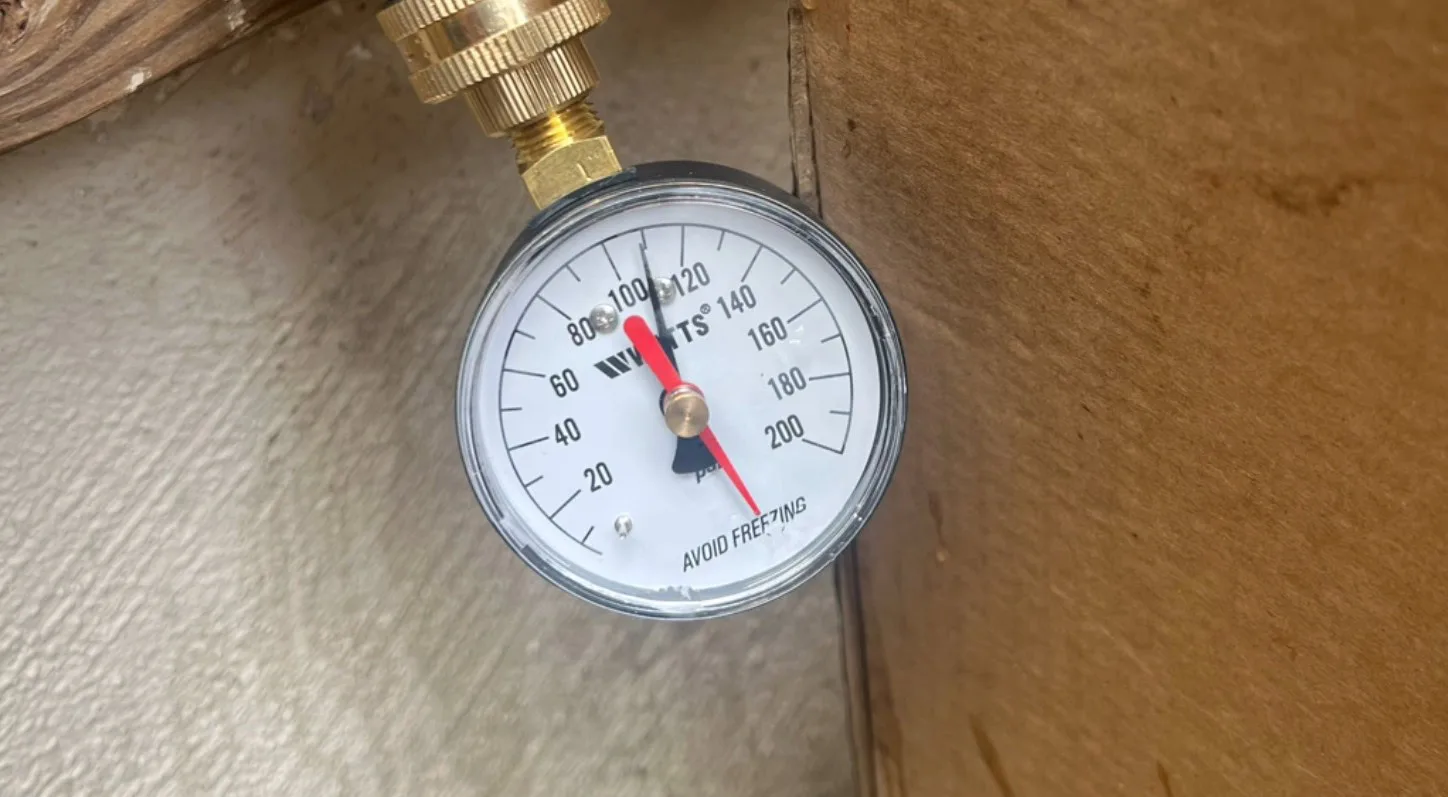
Before: the gauge reading well above the safe range for household plumbing. -
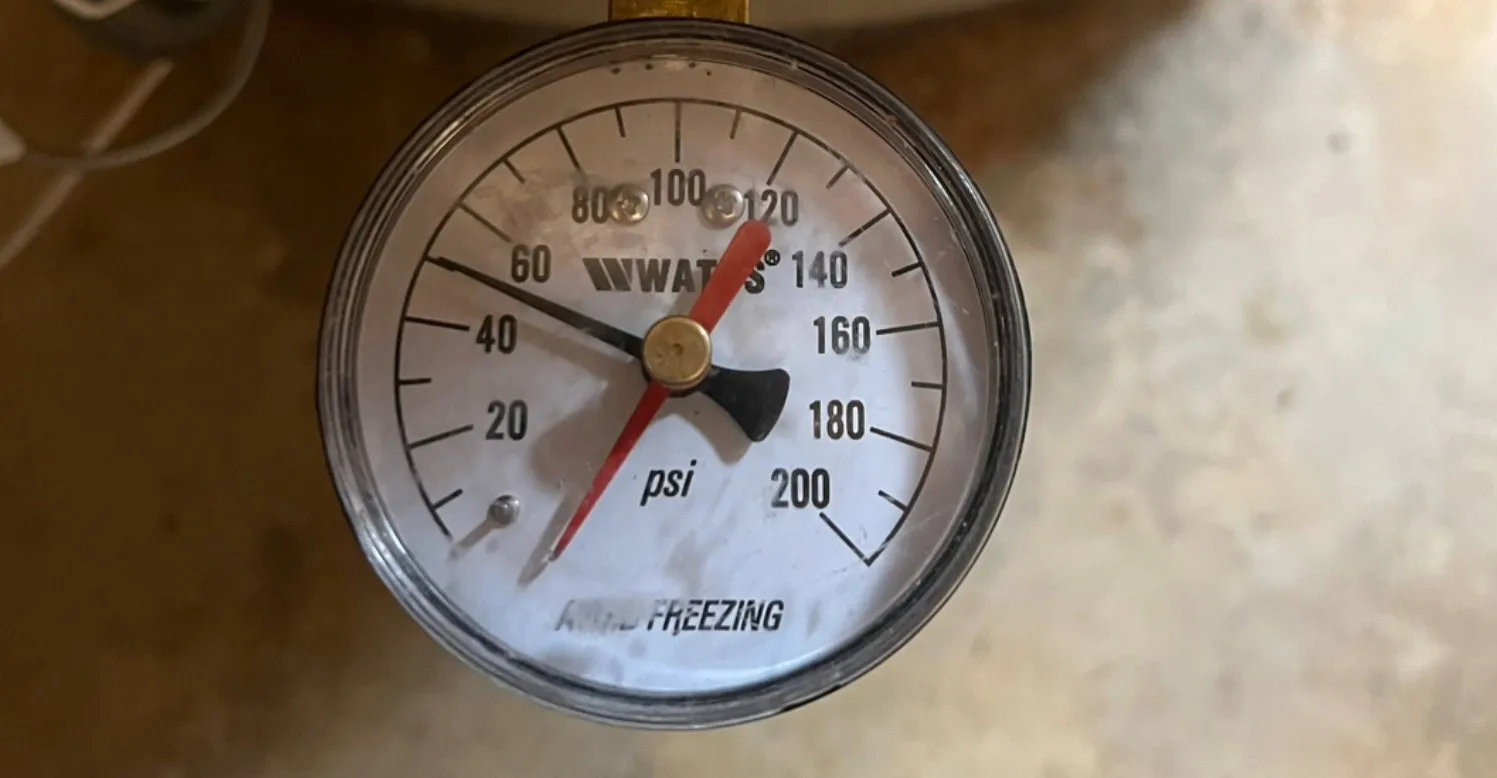
After: pressure back in a safe range with the new PRV in place. -
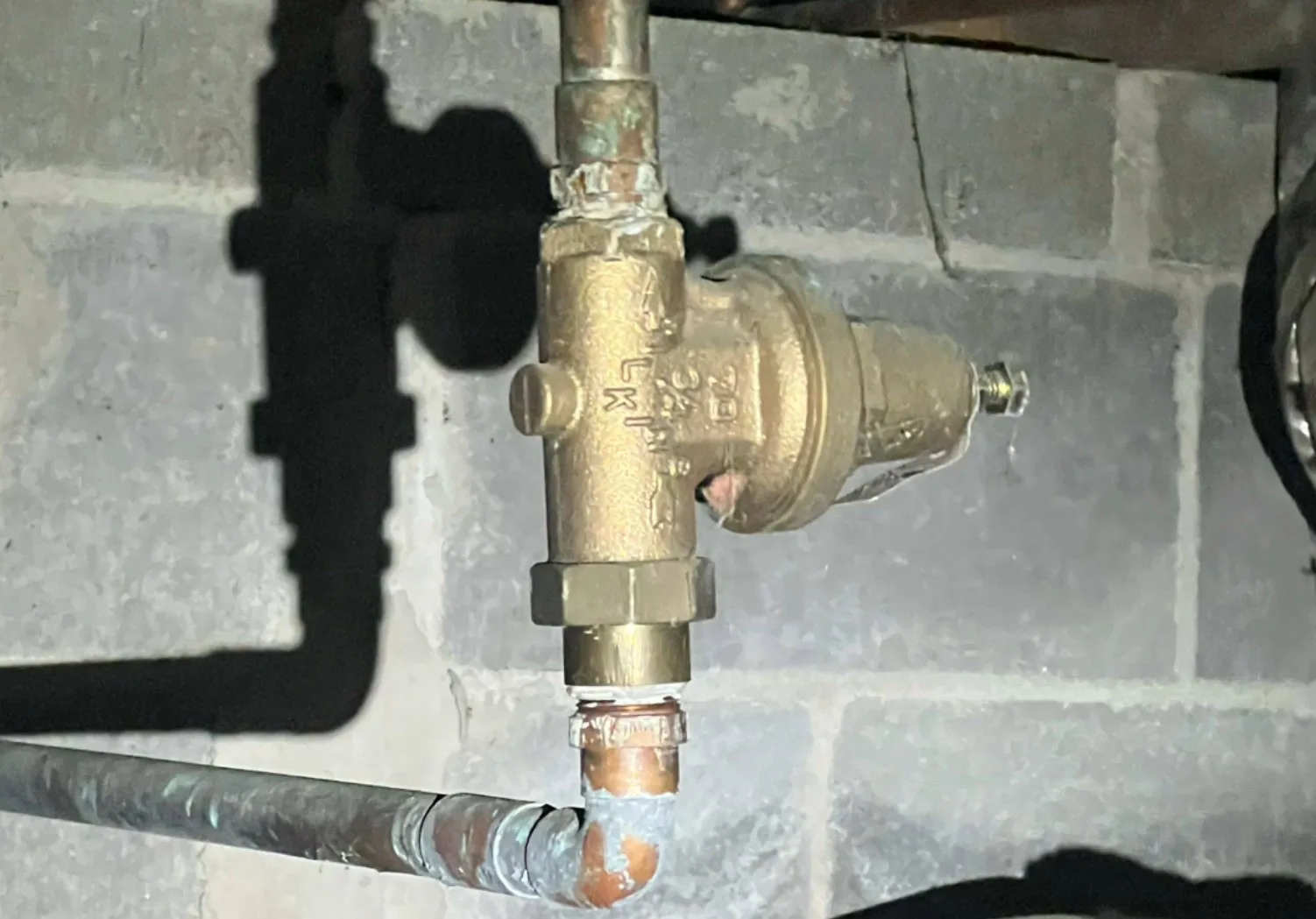
The failed pressure reducing valve we removed. -
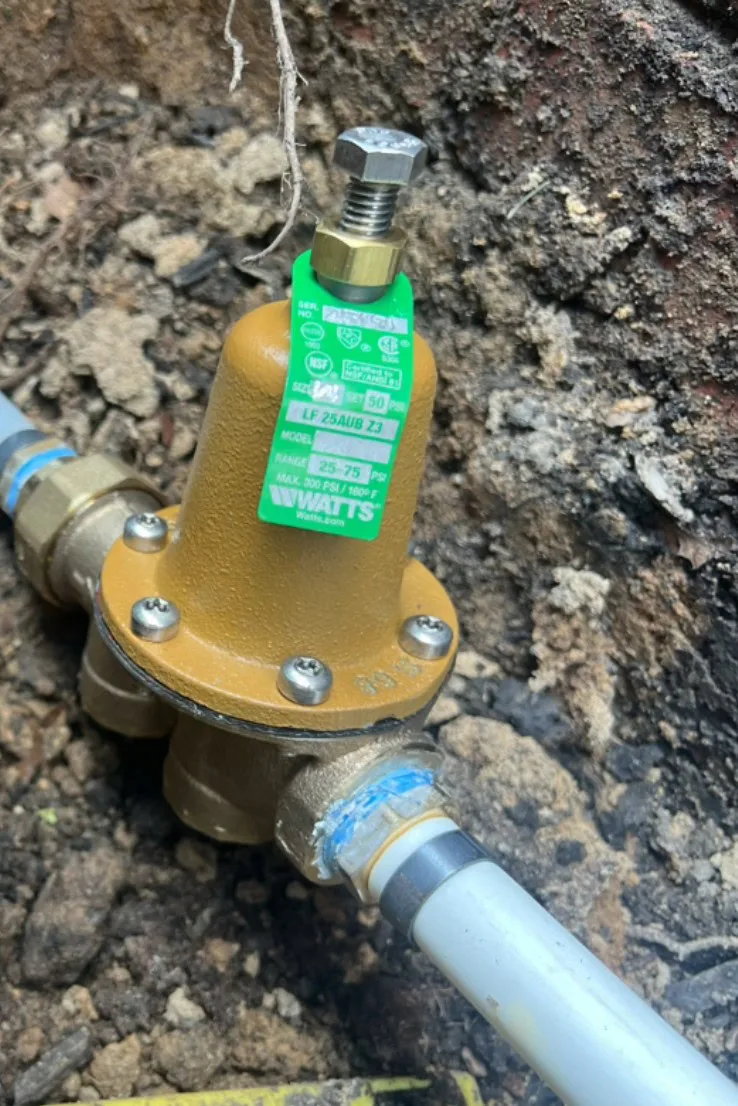
The new pressure reducing valve installed on the supply line. -
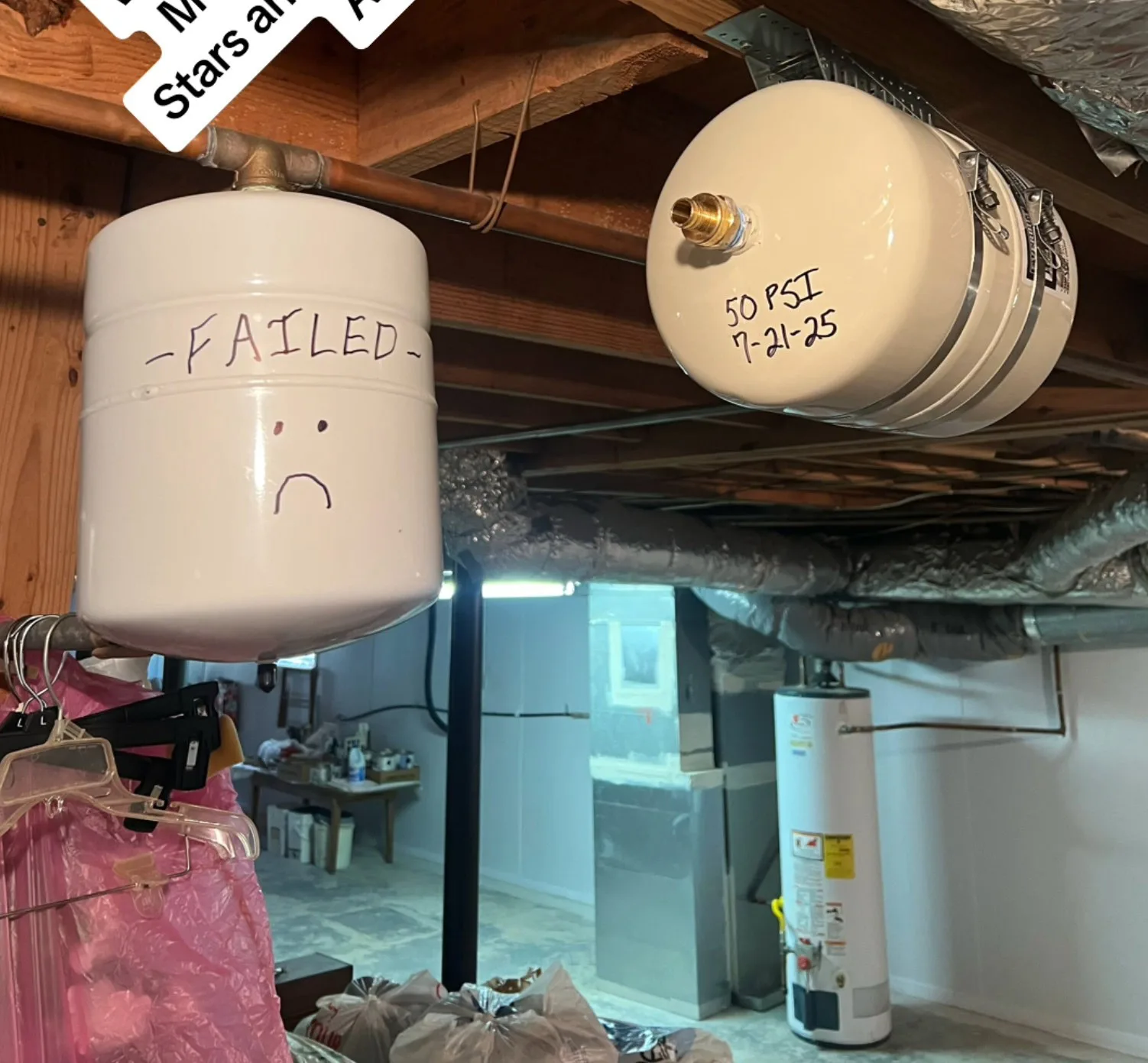
The waterlogged expansion tank we pulled, alongside its replacement.
Rated 5.0 by Local Homeowners
Homeowners who called us
What this job shows
Why we check pressure on every call
High water pressure is the damage you don’t see coming. It doesn’t announce itself the way a leak or a backup does - it just works, silently, on every valve, supply line, and appliance in the house until something gives out early. That’s why a pressure reading is part of every visit, not an upsell.
Catching a failing PRV and a dead expansion tank during a routine check is a small fix that heads off a string of larger ones. It’s the kind of thing a whole-home plumbing inspection is built to surface - and a proactive replacement is almost always cheaper than the fixture, valve, or water heater damage that unchecked pressure causes over time, in any of the communities we serve across Metro Atlanta.
More of our work
See all projects →- Water Service Line Replacement Main Water Service Line Replacement Under a Sidewalk in Snellville, GA Snellville, GA
- Sewer Line Repair Emergency Sewer Line Repair After Tree Root Damage in Lilburn, GA Lilburn, GA
- Slab Leak Repair Slab Leak Repair and Water Heater Replacement in Lilburn, GA Lilburn, GA
Frequently asked questions
What is a pressure reducing valve, and do I need one?
A PRV sits where the water line enters your home and knocks incoming municipal pressure down to a safe level for household plumbing. Many Gwinnett County homes need one because street pressure runs higher than fixtures are rated for. When the valve wears out it can either let pressure climb or choke your flow - both worth fixing.
What water pressure is too high for a house?
Household plumbing is generally built for about 40–60 psi, and most codes cap it around 80 psi. Above that, high pressure hammers valves, appliances, and joints and can quietly cut years off a water heater. If yours reads high, a PRV brings it back into a safe, steady range.
Why replace the expansion tank at the same time as the PRV?
Adding or restoring a PRV creates a 'closed' system, where heated water has nowhere to expand back toward the street. A thermal expansion tank absorbs that expansion; a waterlogged one can't, which sends pressure spikes through the system every heating cycle. Replacing both together is what actually solves the problem.
Have a pressure reducing valve replacement problem?
Talk to a licensed master plumber, get an upfront price, and get it handled - 24/7.