
Licensed · Veteran-Owned · Master Plumber MP211014
Certified Tankless Water Heater Installation in Lilburn, GA
The third shower of the morning runs cold, a bulky tank eats half the closet, and an aging unit sits one leak away from flooding the floor - a tankless system solves all three at once. Stars and Pipes Plumbing Atlanta installs gas and electric tankless water heaters across Gwinnett County - gas line and venting sized right, permitted, and code-compliant. Veteran-owned, master-licensed (MP211014).
- MP211014GA Master Plumber
- Veteran-OwnedFamily-operated since 2024
- 5.0★200+ reviews
- Same-Day24/7 emergency service
Reasons homeowners switch to tankless
You run out of hot water with back-to-back showers
A tank only holds so many gallons. A tankless unit heats water on demand as it flows, so it doesn't run dry between users.
An aging tank is leaking or past its life
There's no stored tank of water to rupture and flood the floor - a wall-mounted tankless unit removes that failure point entirely.
A tank eats up closet or garage floor space
A tankless unit mounts on the wall in a fraction of the footprint, freeing up the space a bulky tank occupied.
Energy bills climb from reheating a standby tank
A tank reheats the same water around the clock; on-demand heating uses roughly 8–34% less energy depending on how much hot water you use.
The household is growing or you're adding a bathroom
Tankless capacity is sized by flow rate (GPM), so the system can be built to your real peak demand rather than a fixed tank size.
You want a unit that lasts
A maintained tankless heater commonly runs 20+ years - roughly double a standard tank - which offsets the higher upfront cost over time.
Rated 5.0 by Local Homeowners
What our customers say
What to expect
- Size the unit to your peak flow (GPM) and check the gas line, meter, and venting, with a flat price before we start
- Remove the old tank and re-pipe with isolation valves so future descaling is quick
- Upsize the gas line and set proper venting - or run the dedicated circuit on an electric unit
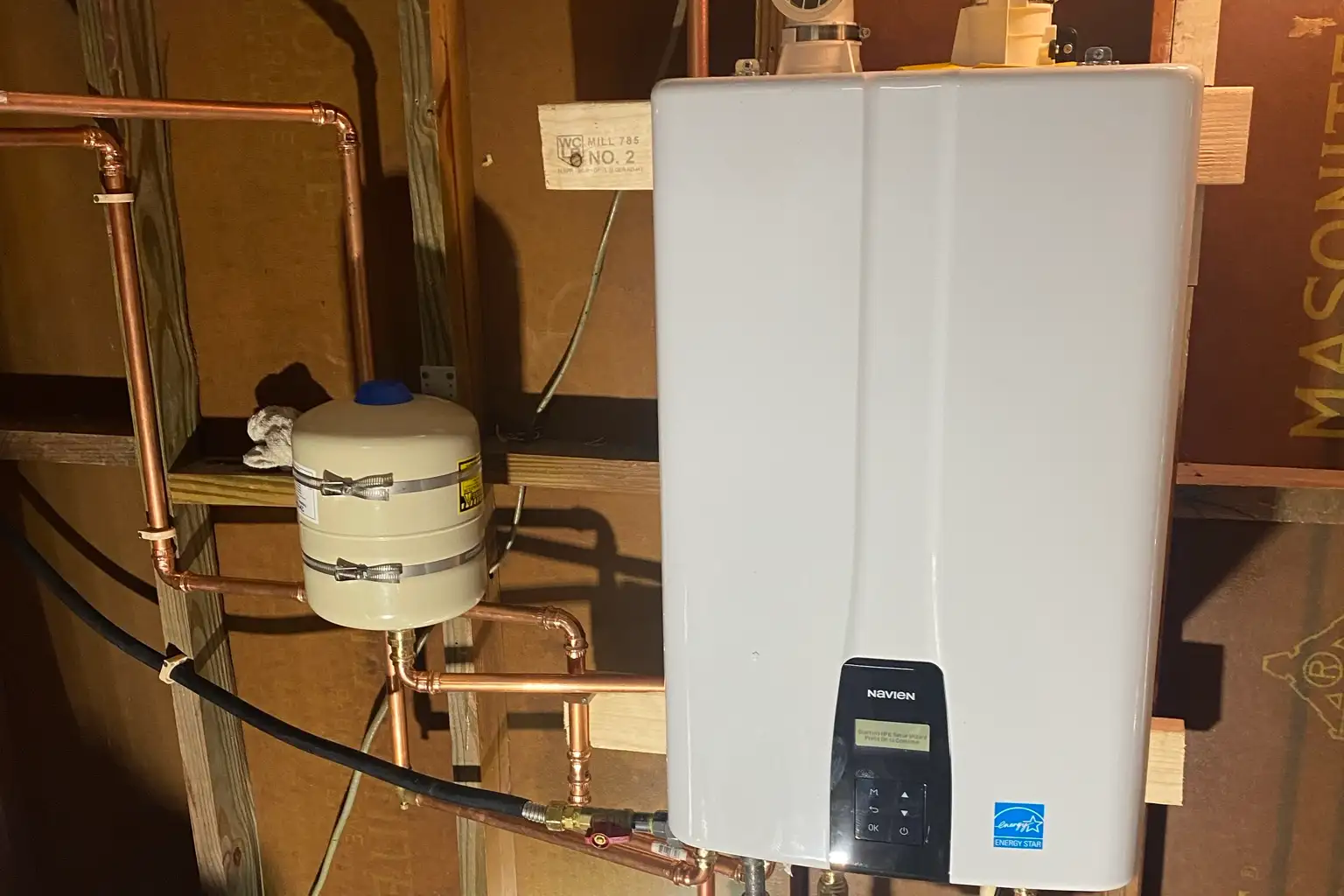
- Add a condensate drain and a thermal expansion tank where code requires them
- Mount, connect, and commission the unit, then pull the permit and set it for inspection
What it costs: One upfront, flat price covers the unit, the gas-line and venting work, valves, permit, and old-tank haul-away - approved before we start. No hourly meter and no surprise upsizing charges.
Call 770-398-STARBrands & parts we service
Brands
- Rinnai
- Navien
- Rheem
- Bosch
- Noritz
- A. O. Smith
Common parts we replace
- gas line upsizing
- vent kits
- isolation & service valves
- condensate neutralizers
- thermal expansion tanks
- descaling kits
- scale filters
Frequently asked questions
Is a tankless water heater worth it in Georgia?
For households that use a lot of hot water and plan to stay in the home, usually yes - the endless hot water, smaller footprint, and 20+ year lifespan offset the higher install cost over time. For a smaller home replacing a tank on a tight budget, a standard tank can be the more practical choice. We'll lay out the real numbers for your situation.
Does a tankless water heater need a bigger gas line?
Often, yes. A gas tankless unit fires a large burst of BTUs on demand, and the existing half-inch line to an old tank frequently can't feed it - so we commonly upsize the gas line and verify the meter can carry the load. This is the single most-missed part of a tankless install and a big reason it's licensed work.
Tankless or a standard tank - which is right for me?
A tank costs less upfront and is a simpler swap, but stores a fixed amount of hot water and lasts 10–15 years. A tankless costs more to install (gas, venting, valves) but delivers endless hot water, saves space, uses less energy, and lasts 20+ years. High-use homes and long-term owners tend to come out ahead with tankless.
How long does a tankless installation take?
A conversion from a tank - removing the old unit, re-piping, upsizing gas, setting venting, and commissioning - is usually a full day, often in the range of six to eight hours. We'll give you a firm window and flat price once we've scoped the gas and venting.
Do I need a permit for a tankless water heater in Georgia?
Yes. Installing a tankless unit involves gas, venting, and often electrical work, all of which require a plumbing permit and inspection in Gwinnett and neighboring jurisdictions. Skipping the permit risks fines and can void the manufacturer's warranty - we handle the permit and the inspection as part of the job.
How often does a tankless water heater need descaling?
Plan on descaling about once a year - Metro Atlanta's soft city water is gentler on a heat exchanger than a hard-water region, but every manufacturer still wants that flush to hold the warranty, and homes on a well need it more often. We install isolation (service) valves during the install specifically so that annual flush is quick and low-cost, and we can put you on a maintenance schedule to protect the warranty.
Can a tankless run multiple showers at once?
Yes, if it's sized for it. Capacity is measured in gallons per minute, so we add up your likely simultaneous demand - two showers, a dishwasher, a washer - and spec a unit (or, for very large homes, more than one) that keeps up. An undersized unit is the usual reason people are disappointed, which is why sizing comes first.
Gas or electric tankless?
Gas tankless units are more powerful and better suited to whole-home use, but need proper gas sizing and venting. Electric tankless units avoid venting but draw heavy current and may require a panel upgrade, and they're better for smaller or point-of-use needs. We'll match the fuel to your home's capacity and hot-water demand.
Tankless water heater installation across Gwinnett County
The homes that gain the most are the ones fighting their tank daily - a full Lawrenceville household running out mid-morning, a Johns Creek home where three baths run at once, a Suwanee owner who wants the garage floor back, a Snellville family adding a bath the old 40-gallon can’t feed. We size each unit to real peak demand rather than a one-box guess, so it keeps up with the way the house actually runs hot water, wherever you are across the Gwinnett County neighborhoods we serve.
The make-or-break on a gas tankless is the fuel side: the unit fires a big BTU burst on demand, and an old half-inch line usually can’t carry it - so most conversions include upsizing the gas line and setting proper venting before the heater ever mounts. We handle the gas sizing, the venting, and the periodic descaling every tankless unit needs with the same care as the rest of our plumbing work, all under one licensed crew - the same conversion whether it’s a Dunwoody ranch or a Grayson subdivision home.
Where we work
Cities we serve across Metro Atlanta
- Lawrenceville
- Lilburn
- Tucker
- Snellville
- Dunwoody
- Doraville
- Johns Creek
- Suwanee
- Norcross
- Buford
- Loganville
- Duluth
- Grayson
- Decatur
- Stone Mountain
- Cumming
- Buckhead
- Peachtree Corners
- Sandy Springs
- Alpharetta
- Roswell
- Marietta
- Brookhaven
Need tankless water heater installation today?
Talk to a licensed plumber now - upfront pricing, no surprises.